July Highflyer (Hydriomena furcata)

Status: Common throughout the UK.

'Monthly Urn, Fork-like'

(Hydrio from hudria = water jar/urn + mena = month: Greek, furcata = fork-like: Latin)

An extremely variable moth which is often green with varying degrees of black marbling, but can also be brown with black marbling, completely melanic or marbled with faded greenish-brown tones.

Like the other 'highflyer' moths, the July Highflyer has forewings that are distinctly shouldered at the base and the wing shape is described in the genus name as urn-like.

July Highflyer Hydriomena furcata

Typical green form

July Highflyer Hydriomena furcata

Melanistic blackish-brown form

Flight Period: One generation: from July to August in Southern Britain, from late July to early October in Northern Scotland.

Foodplants: A variety of trees & plants including Hazel, sallows, Creeping Willow and Bilberry.

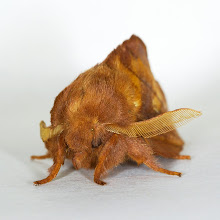
Coxcomb Prominent (Ptilodon capucina)

Status: Common throughout the UK.

'Feather-toothed, Capuchin friar'

(Ptilo = feather + don = tooth: Greek, capucina = Capuchin friar, aka the Order of Friars Minor Capuchin).

The scientific name of this distinctive moth refers to the prominent tufts of hair on the thorax and abdomen: Ptilodon (feather-toothed) and capucina: an allusion to the brown hooded garb of the Order of Friars Minor Capuchin - after which the Capuchin Monkey is also named.

In Germany this species is known as the 'Kamelspinner' (or Kamel Zahnspinner) due to its camel 'humps'!

Coxcomb Prominent Ptilodon capucina

Coxcomb prominent

Coxcomb Prominent Ptilodon capucina

Coxcomb Prominent Ptilodon capucina

Coxcomb Prominent Ptilodon capucina

Flight Period: Usually two generations: first from late April to June, second brood from August to early September.

Foodplants: A variety of broad-leaved trees including Birch & Hazel.

Garden Pebble (Evergestis forficalis)

Status: Common throughout the UK.

'To-meander-forth (?), Scissor-like'

(Evergestis = possibly from the Latin 'evergere' = to send out/to meander forth, forficalis = shear/scissor-like: Latin).

Normally, this species holds its wings in a tent-like posture (not shown in the photo below). This; and the sharp diagonal lines running from the wing-tips; are the inspiration for the species name forficalis (scissor-like).

Garden Pebble Evergestis forficalis

Note: atypical posture - normally rests with wings tented.

Flight Period: Two broods - first from May to June, second brood from late July to September.

Foodplants: Plants of the Brassicaceae (cabbage) family.

Marbled Beauty (Cryphia domestica)

Status: Common throughout most of the UK - more localized & urban in Scotland.

'Hidden, Of-the-house'

(Cryphia = from kryphios, hidden: Greek, domestica = of the house: Latin).

There is much variation in the patterning of this little lichen mimic: ground colour is silver-grey with varying degrees of black/grey, dull orange or greenish marbling.

The larva feeds on lichens at night and hides in a silken retreat during the day.

Often confused with the Marbled Green (Cryphia muralis muralis), but can be distinguished by the following features:

*Marbled Beauty = BASAL CROSS-LINE (near head) is CONTINUOUS (from leading to trailing edge). More rounded tip to forewing & normally a pale grey ground colour.

*Marbled Green = BASAL CROSS-LINE is INCOMPLETE & curves downwards towards oval, forming a pale 'CLOVER-LEAF' shape. Sharper, more right-angled tip to forewing & ground colour distinctly greenish.

Marbled Beauty (Cryphia domestica)

Marbled Beauty (Cryphia domestica)

Note the continuous basal cross-line & rounded wing-tips.

Flight Period: July to August.

Foodplants: Lichens. Rock growing species such as Lecidia confluens are particularly favoured.

Flame Carpet (Xanthorhoe designata)

Status: Common throughout the UK.

'Yellow-flow, Defined'

(Xantho = yellow + rhoe = flow: Latin, designata = defined/distinct/designated: Latin).

This easily recognised moth has a reddish-brown and black 'flamy' central cross-bar (with a double projection on the outer edge) upon a silvery-grey ground colour.

The only similar species is the Red Carpet (Xanthorhoe decoloraria decoloraria), which has one projection on the outer cross-band and a dark diagonal mark near the wing-tip.

Flame Carpet (Xanthorhoe designata)
Flight Period: Two generations in the south of UK (May to June & late July to August). In Scotland, one generation: June to July.

Foodplants: Unknown. In captivity, will eat Wallflower (Erysimum cheiri) and other members of cabbage family.

Light Emerald (Campaea margaritata)

Status: Common throughout the UK.

'A Caterpillar, Pearly'

(Campaea = a caterpillar: from the Greek kampe, margaritata = pearly: Latin).

In France, this moth is known as 'Le Céladon' (celadon is a type of ancient Chinese pottery with a pale jade-green glaze): a more fitting description of the colour than the English common name.

The colouration is most intense in freshly emerged specimens and fades to whitish within a few days.

Larvae are brown and twig-like, with hairy extensions fringing the ventral surface - this may help the larvae cling to branches - they rest with their ventral surfaces pressed tightly against tree branches (overwintering as larvae in exactly this way).

Light Emerald (Campaea margaritata)

Light Emerald (Campaea margaritata)

Light Emerald (Campaea margaritata)

Close-up showing the shimmery, pearlescent scales on the wings.

Light Emerald (Campaea margaritata)

Flight Period: Late May to early September.

Foodplants: A variety of broad-leaved trees & shrubs (including Pedunculate Oak & Hawthorn).

Celadon pottery - which gives this moth its common name in France.

(Courtesy of the Metropolitan Museum of Art - http://www.metmuseum.org)

White Ermine (Spilosoma lubricipeda)

Status: Common and widespread.

'Spotted Body and Slippery Feet'

(Spilo = spotted/stained + soma = body: Greek, lubrici = slippery + peda = feet: Latin).

Like many other members of the Arctiidae family, the White Ermine can sequester pyrrolizidine alkaloids, making all life-stages toxic to predators. The larvae are also covered with irritating hairs (like those of other Arctiidae) and are known as 'wooly bears'.

Some individuals have heavier black markings (which may form stripes) and in parts of Scotland a form occurs with a grey-buff ground colour (see the UK Moths website: http://ukmoths.org.uk/show.php?id=3124).


Flight Period: Mid May to late July.

Foodplants: A variety of herbaceous plants (including Stinging Nettle and Docks).

This moth's namesake - a rather fanciful 'dalmatian' ermine (the moth is closer to this than a real ermine).

(Courtsey of Hatfield House: http://www.hatfield-house.co.uk/)